

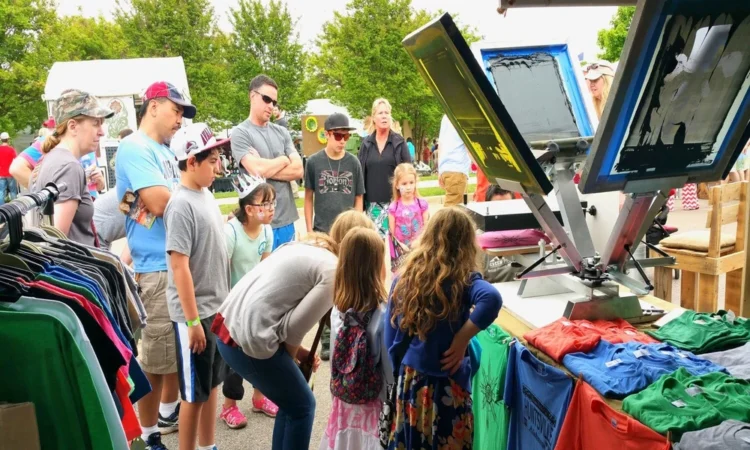
Why do events need shirts?
Printed shirts solve visibility problems, as no lanyard or badge is needed, marking staff and crew across crowded venues at a glance. Attendees searching for help scan a room and spot a uniform colour before reading any sign.
Recognition is half the story, though. Matching garments fold temporary workers into teams before introductions finish, calming first-day nerves across registration desks and entrance gates. Event organisers collecting finished pieces from Luminous Printing before large gatherings tend to split colours by role, one shade for registration, another for floor crew, a third for security, letting guests learn the code without explanation. Conferences, launches, product showcases, trade fairs, all lean on this quiet system. Photographs benefit as well. Group frames from any gathering gain order when clothing matches, and those images circulate for months, carrying event identity inside them. One garment order ends up doing visibility, teamwork, and publicity work at once.
How should planning run?
Working backwards from event morning builds the safest schedule, since garments arriving after setup day lose their whole purpose. A simple countdown keeps production calm.
- Lock artwork and colour splits three weeks before doors open.
- Collect staff sizes during week two, weighting orders toward middle sizes.
- Approve one printed sample before releasing the full run.
- Receive finished garments several days ahead, never the night before.
- Hold spare pieces per size for late crew additions.
Each step exists because someone once skipped it. Samples catch placement errors while corrections cost little, buffers absorb surprise staffing changes, and early delivery leaves room for reprints if anything arrives wrong.
Crowds read clothing
Business events run more smoothly when clothing itself directs people, cutting queues at information desks before questions even form. Attendees needing registration, medical help, or tech support locate the right person through printed role labels alone, CREW, STAFF, MEDIC, across backs, carrying function further than any badge.
Sponsor obligations get met through garments, too. Partner marks along the shoulders give visible credit during every session, fulfilling agreements while presentation screens change topics. Corporate hierarchy stays readable as well, muted tones keep speakers and executives understated, while bright shades pull attendees’ eyes toward helpers near entrances. Fewer signposts, fewer announcements, fewer lost guests, printed clothing quietly absorbs work that would otherwise need extra staffing or signage across the venue floor.
Shirts outlive events
Teardown ends the event, not the garments. Pieces keep serving the business for months once the doors close.
- Staff wearing shirts at later gatherings signal experience to new attendees.
- Volunteers keeping garments hold physical proof of involvement.
- Dated designs turn each annual edition into a small collectable.
- Undated artwork stretches one production run across a full season.
- Archived pieces framed inside offices build a fabric timeline of growth.
Regular helpers slowly build stacks, recording their history with a gathering, something no digital record replaces quite the same way.
Garments move through events as working tools, not decoration. Role clarity before doors open, sponsor credit during busy hours, and keep pieces after everything closes; each stage draws value from decisions made weeks earlier. Teams respecting that countdown watch one clothing order carry an entire gathering from the first setup hour to the final photograph.


